Communication Patterns#
In computer networking, communication patterns refer to the ways in which data is exchanged between different applications. These patterns define the data processing pipelines and distributed to other applications. Understanding these patterns is crucial for designing efficient and effective network architectures.
Sampling data rates in conjunction with communication patterns is an important consideration as data transmission can be costly in terms of latency, bandwidth, and resource utilization. By selecting the appropriate communication pattern for a given use case, developers can optimize data transfer and improve overall system performance. Event-driven communication, for example, can help reduce latency and improve responsiveness by allowing applications to react to events in real-time. Alternatively, streaming data can be useful for applications that require continuous data transfer, such as video streaming or real-time analytics.
Data loss is also an important consideration in determining the appropriate communication pattern. Working in the trade-offs between TCP and UDP protocols can help balance appropriate data loss, as TCP provides reliable data transfer while UDP is faster but less reliable.
Request-Reply Pattern#
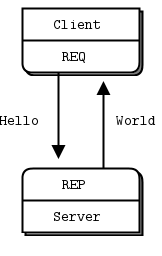
The request-reply pattern is a synchronous communication pattern where a client sends a request to a server and waits for a response. This pattern is commonly used in web applications, where a client sends an HTTP request to a server and waits for an HTTP response.